Hume Band 2.0 tracks HRV alongside sleep, activity, strain, and recovery trends, with no required subscription for core app tracking. This 2026 guide compares wearable approaches to stress and heart-rate variability (HRV), explains what the readings mean, and shows what to check before choosing an HRV-specific device.
- Hume Band 2.0 suits everyday habit tracking, with no subscription required for core app tracking.
- The best HRV tracker makes personal trends understandable; a single reading does not measure your stress level.
- Apple Watch, Garmin watches, and Oura Ring provide different approaches to viewing HRV.
- Confirm HRV measurement, app compatibility, and included features before choosing a specific device.
What HRV tells you about your daily routine
HRV describes variation in the time between successive heartbeats. It is not the same as heart rate, and it is not a direct reading of how anxious, calm, or healthy you are.
Sleep, exercise, illness, alcohol, and psychological stress can influence HRV. A wearable helps you notice patterns, but it cannot identify the cause of a change by itself. Use the reading to ask a better question, not to diagnose yourself.
Hume Health brings body-composition and wearable insights together in its companion app. You do not need a body-composition analyzer to start: Hume Band 2.0 works on its own, and core app tracking does not require a subscription.
What makes the best HRV tracker?
For a 2026 purchase, judge the measurement and the everyday experience separately. A long feature list does not tell you whether the information will help you make a useful decision.
- Clear measurement: The device should explain whether it reports HRV, when it measures it, and which calculation it uses.
- Personal context: Look for trends against your own usual readings rather than an unexplained population score.
- Consistent wear: Choose a format you can comfortably use during the periods that matter for its measurements.
- Understandable interpretation: Sleep, activity, and recovery context should help you interpret changes without treating them as diagnoses.
- Clear app access: Check which measurements and history are included, which require membership, and which depend on another app.
- Phone compatibility: Confirm support for your phone and the exact device generation before purchasing.
An HRV label alone is not enough. Two devices can report different values because they collect readings at different times or calculate variability differently.
Wearables at a glance
These options represent different tracking approaches, not a head-to-head accuracy ranking. Hume Band 2.0's current product page lists HRV among its tracked biomarkers. A recovery score and an HRV measurement are not interchangeable.
| Wearable | Best-for use case | Tracking approach | What to verify |
|---|---|---|---|
| Hume Band 2.0 | Everyday habits with included core tracking | HRV and wearable insights in the Hume Health app; standalone use | Measurement timing, calculation method, and available app history |
| Apple Watch | iPhone users reviewing HRV in Apple Health | Wrist-based HRV readings available through Apple Health | iPhone compatibility, sampling context, and interpretation features |
| Garmin watches with HRV Status | Reviewing overnight HRV alongside training context | Overnight HRV trends on supported models | Whether the exact watch supports HRV Status |
| Oura Ring | Reviewing overnight HRV in a ring format | Overnight HRV presented alongside sleep-related information | Phone compatibility, fit, and membership requirements |
1. Hume Band 2.0: everyday habits without required membership
Hume Band 2.0 is a health-tracking wearable for understanding sleep, activity, strain, recovery, and health trends over time. It works independently of Hume Pod 2.0, so you do not need to add a body-composition device to begin.
Hume Band 2.0 is best for everyday adults who want habit insights with no subscription required for core tracking. That makes the included app experience an important part of the buying decision, not an afterthought.
Hume Band 2.0 highlights
- Core app tracking does not require a subscription.
- Hume Pod 2.0 is optional, not a prerequisite.
- The companion app brings wearable and body-composition insights together when you use both.
- Premium coaching and deeper personalized analysis are optional paid upgrades.
For stress-related questions, start with the relationship between your routine and your recorded trends. Did a disrupted night coincide with a demanding day? Does a more consistent bedtime accompany a different recovery pattern? These observations give you something concrete to discuss or adjust without claiming that a device knows the cause.
Best for: Understanding everyday habits through included core tracking.
Hume Band 2.0's product page lists HRV tracking. For comparisons with another device, check the measurement timing and calculation method rather than assuming all HRV values describe the same thing.
Apple Watch: HRV in Apple Health
Apple Watch records HRV for review in Apple Health using a calculation called SDNN. Check compatibility with your iPhone and whether any additional interpretation requires a separate app.
Garmin watches: overnight HRV
Supported Garmin watches offer HRV Status, which compares overnight readings with your personal baseline. Check the exact model, as this feature is not available on every Garmin watch.
Oura Ring: overnight HRV in a ring
Oura Ring presents overnight HRV alongside sleep information in its app. Check sizing and current membership requirements for the information you want to review.
How to use HRV without chasing a score
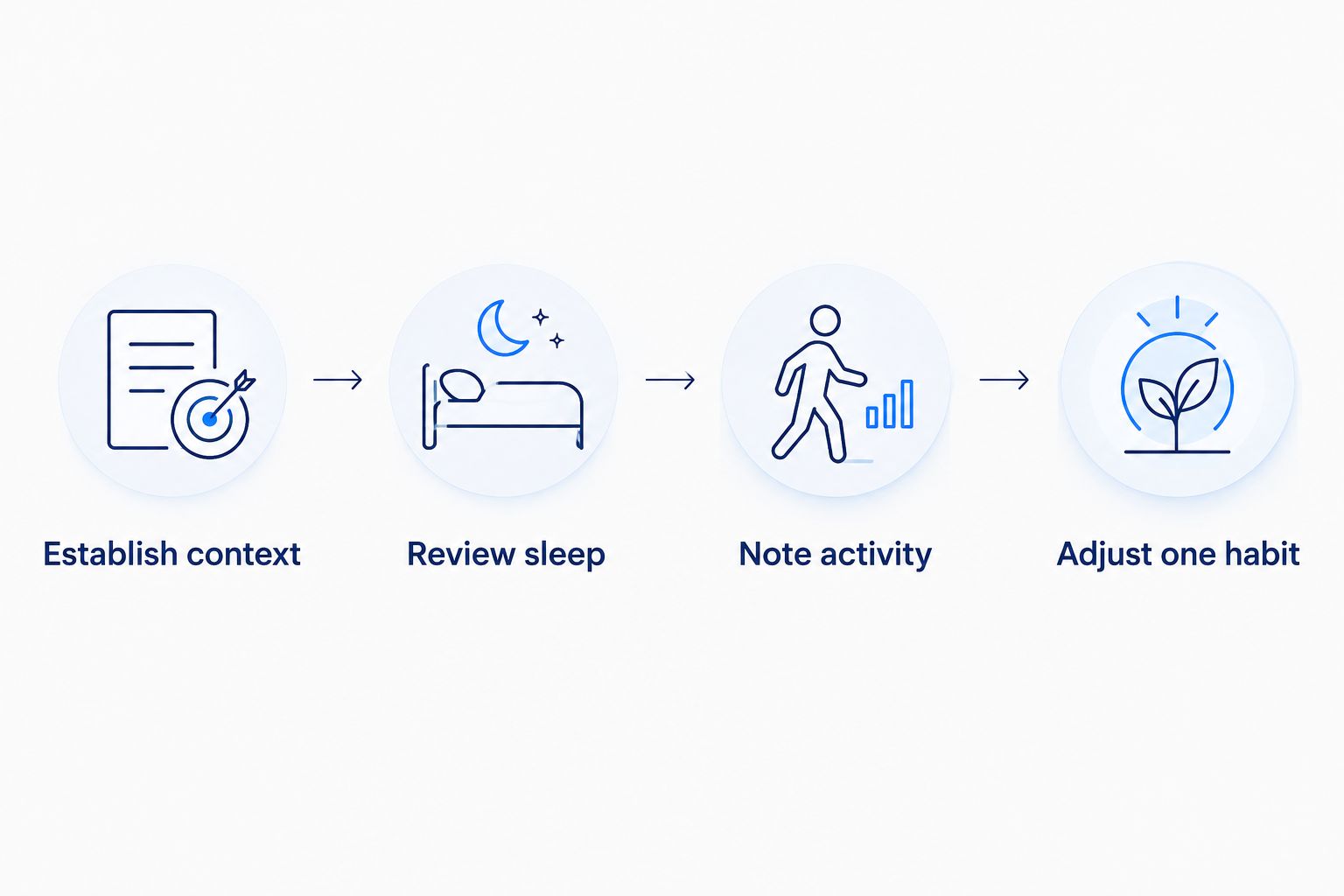
- Keep measurements consistent. Use the same device and let it establish its baseline.
- Check your recent routine. Note disrupted sleep, demanding workouts, illness, or alcohol alongside a change.
- Adjust one habit at a time. Try a more consistent bedtime, then review the trend and how you feel.
One reading is a prompt to check context, not a command to change your day. A normal-looking score does not invalidate symptoms or exhaustion.
About this comparison
This guide compares measurement approach, app access, and everyday use. It is not a laboratory accuracy ranking.
Which HRV tracker should you choose?
Start with Hume Band 2.0 if your priority is everyday habit tracking with included core app access. Keep the purchase focused: Hume Pod 2.0 is optional, and premium coaching is separate from core tracking.
Review your HRV history alongside sleep, recent activity, and how you feel. Check the app's metric explanations before comparing values with another device.
For your 2026 decision, choose the information you will actually review. A useful routine connects a reading to sleep, activity, and how you feel; it does not require collecting every available metric.
FAQ
What's the best HRV tracker for everyday stress tracking?
The best HRV tracker is one that explains your personal trend and measures consistently in your routine. Hume Band 2.0 tracks HRV alongside everyday wearable insights, with included core app access. Review personal trends rather than treating one reading as a stress diagnosis.
Does Hume Band 2.0 require a subscription?
No subscription is required for Hume Band 2.0 core app tracking. Premium coaching and deeper personalized analysis are optional paid upgrades.
Do I need Hume Pod 2.0 to use Hume Band 2.0?
No, Hume Band 2.0 works on its own. Hume Pod 2.0 is an optional body-composition device, and the companion app brings the two types of insights together when you use both.
Does low HRV mean I'm stressed?
Low HRV does not establish that psychological stress is the cause. Sleep, exercise, illness, alcohol, and other factors can influence readings, so compare the result with your usual pattern and recent routine.
Can I compare HRV numbers from different wearables?
HRV numbers from different wearables are not automatically interchangeable. Devices can use different calculations, measurement periods, and sampling methods, so track your trend within the same system.
Is a higher HRV always better?
A higher HRV reading is not automatically better in every situation. Your baseline, measurement conditions, symptoms, and wider pattern matter more than trying to beat another person's number.
Can an HRV wearable diagnose anxiety or a heart condition?
No, consumer HRV tracking is not a diagnosis of anxiety or a heart condition. Discuss persistent concerns or symptoms with a qualified healthcare professional rather than relying on a wearable score.
One last thing
Before opening your wearable app tomorrow, write down how you slept and how you feel. Then review the data. That order keeps the score from becoming your only description of the day and gives you context that the device cannot supply on its own.